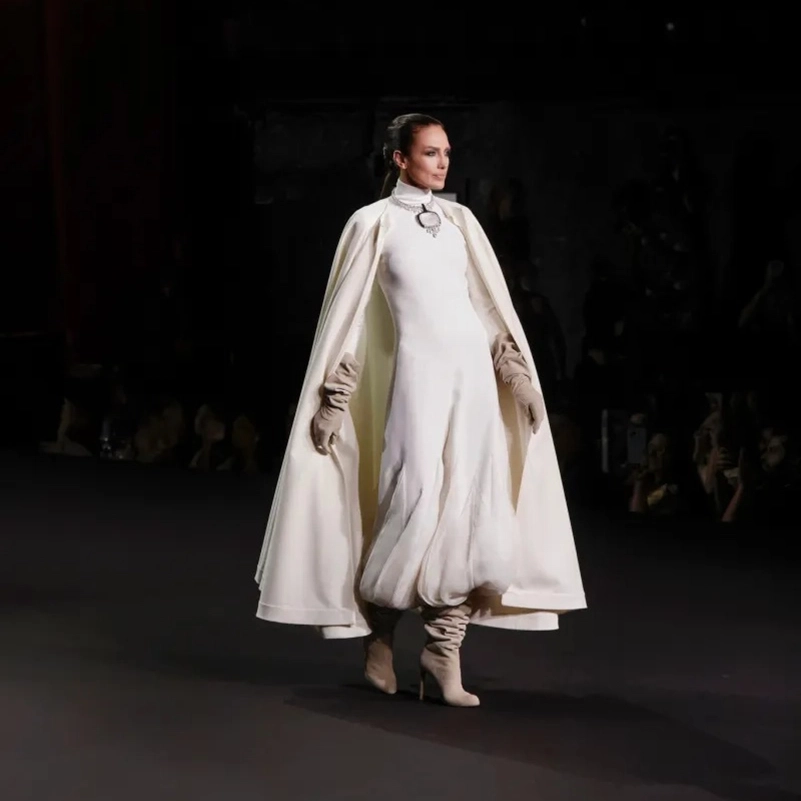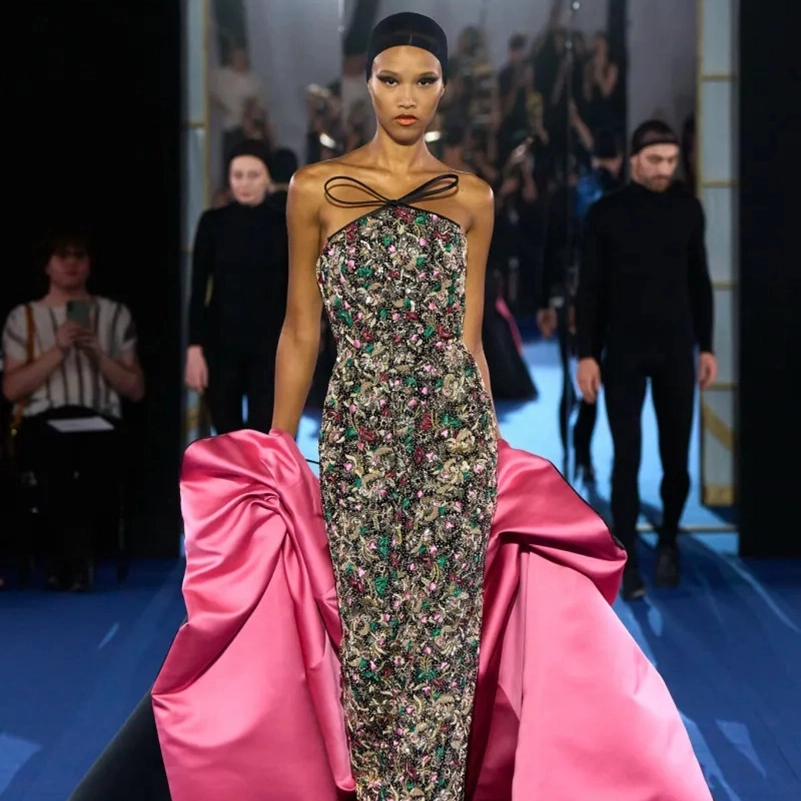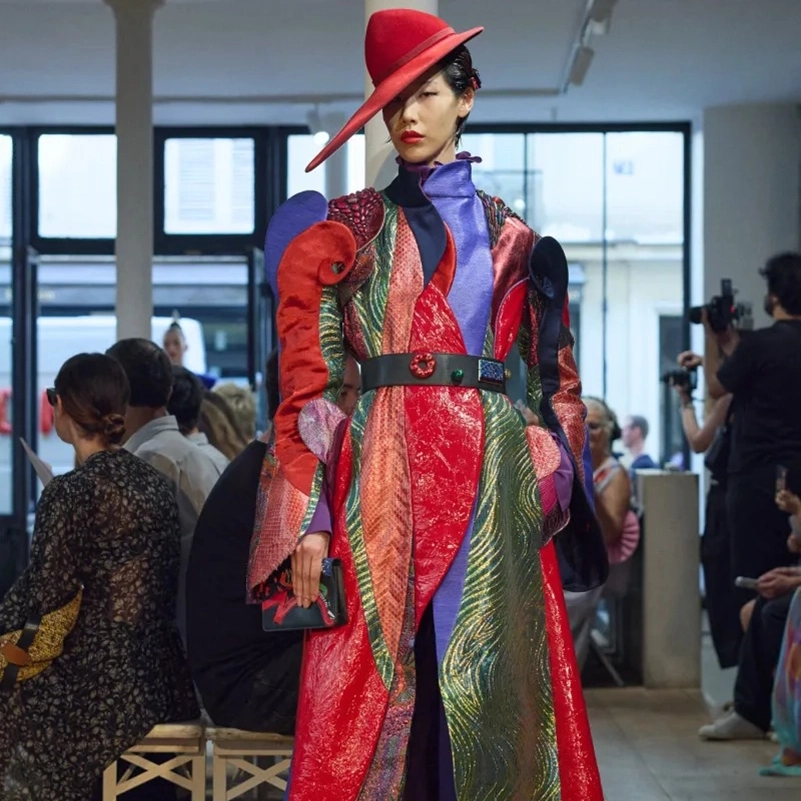



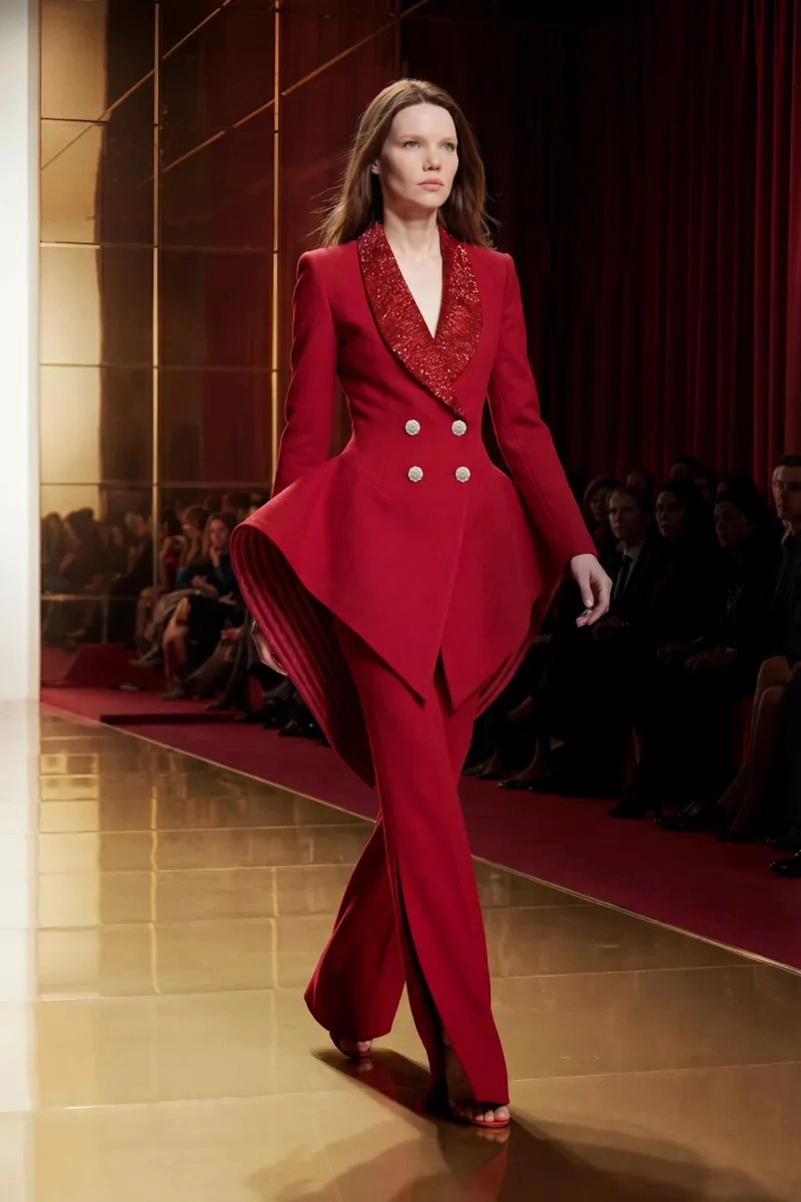
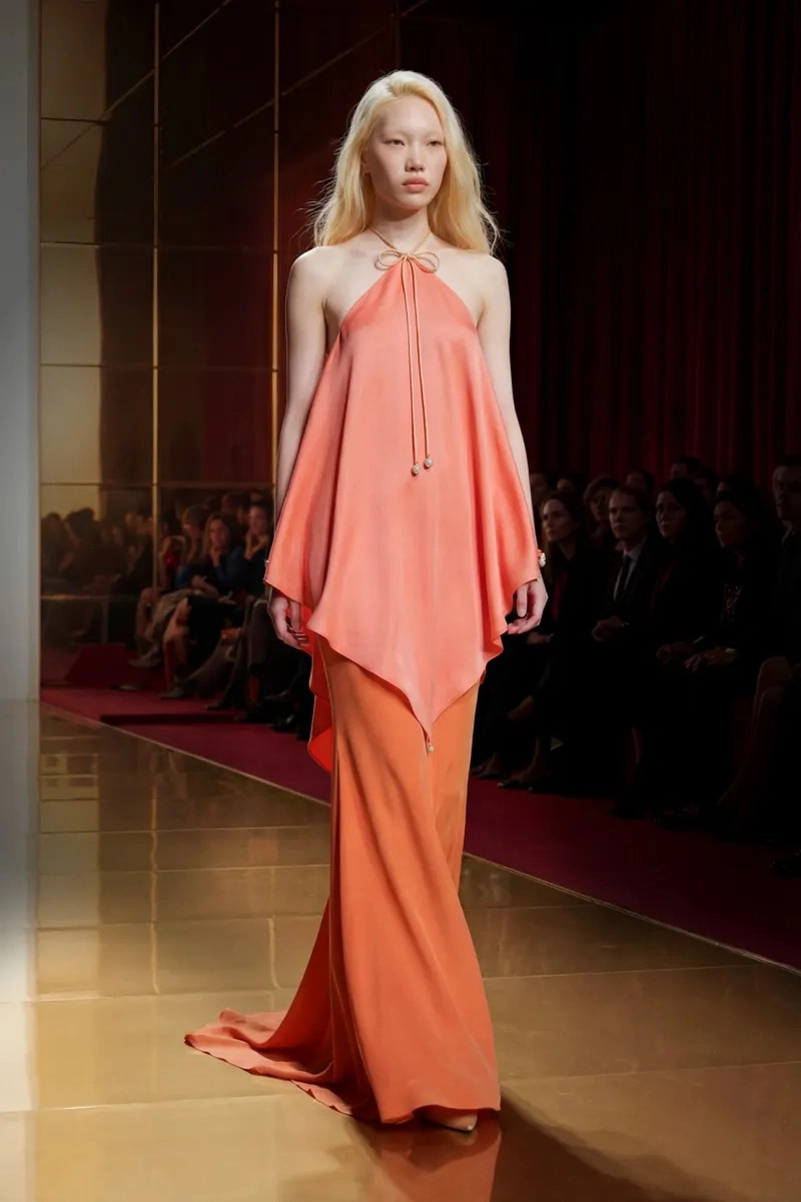
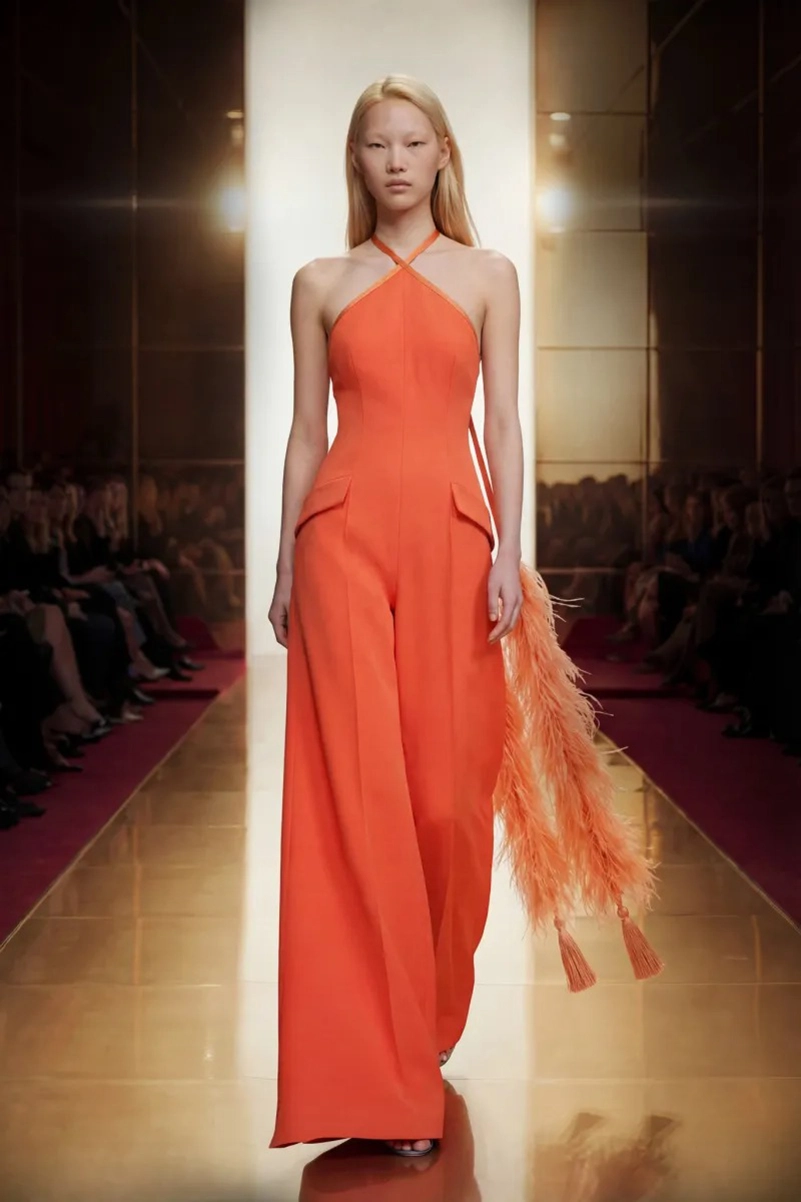
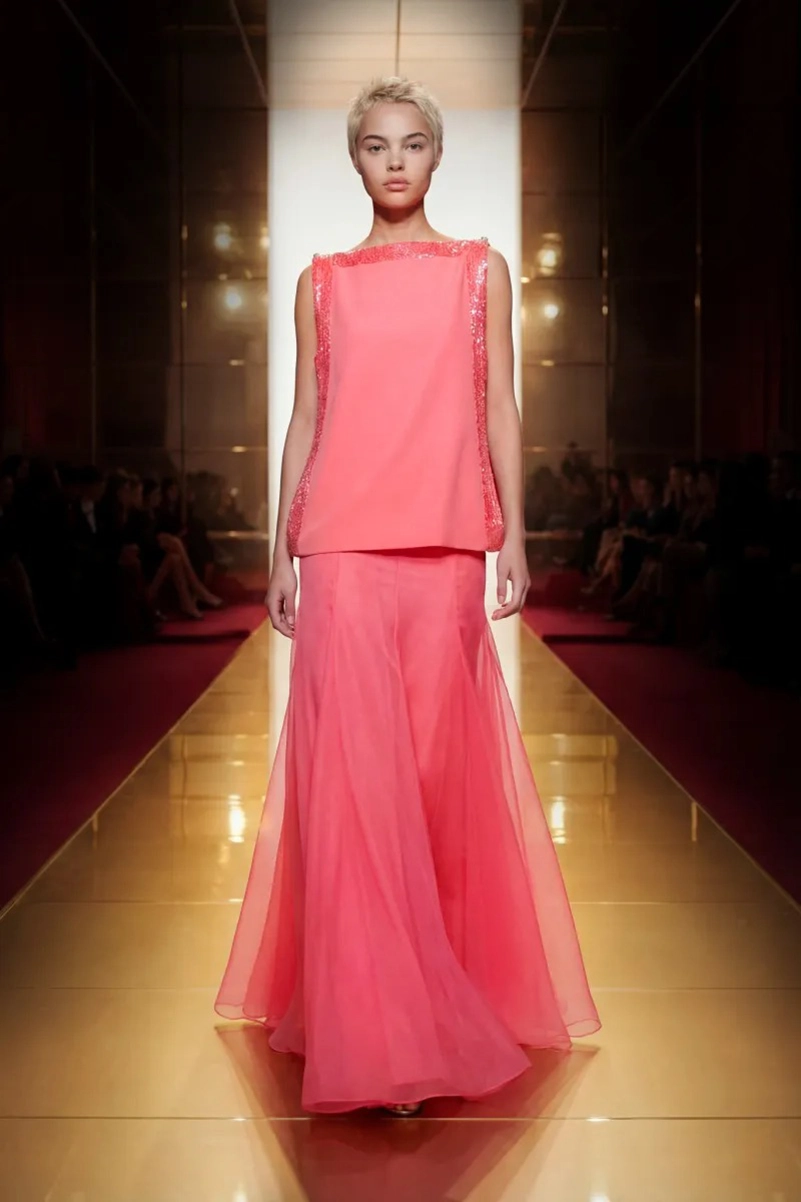
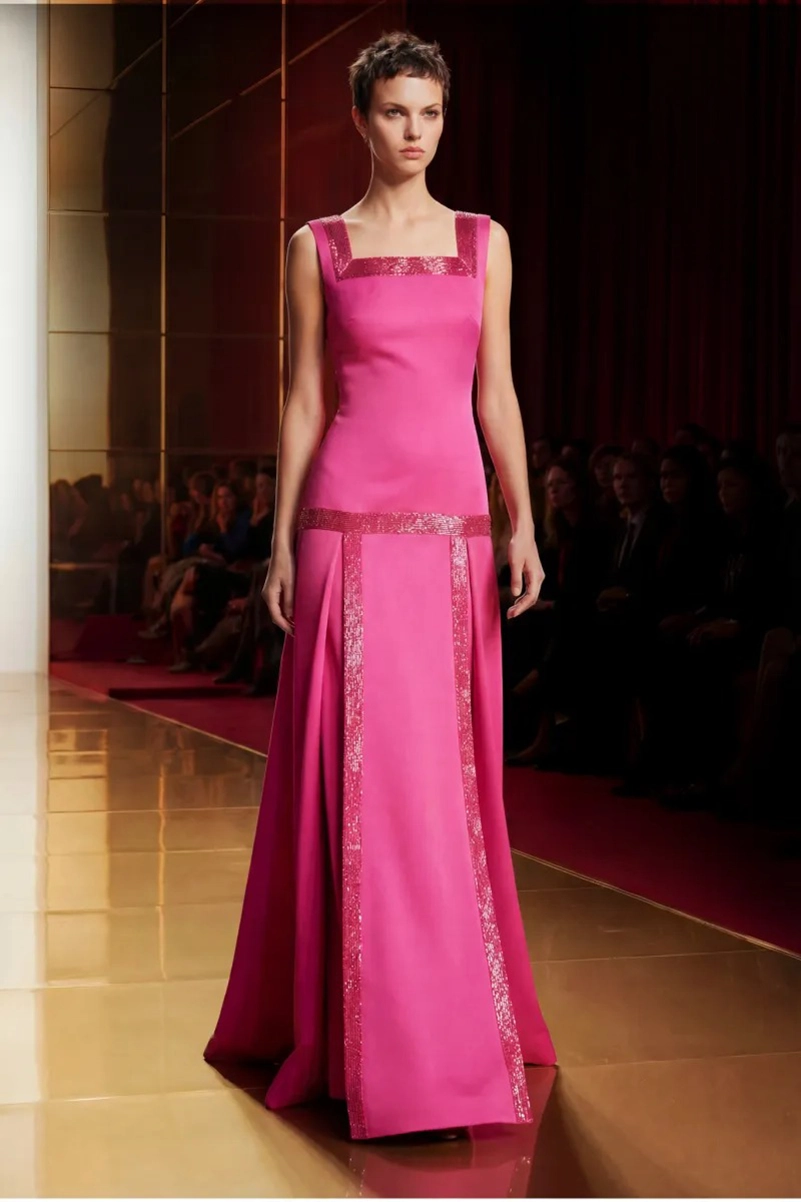
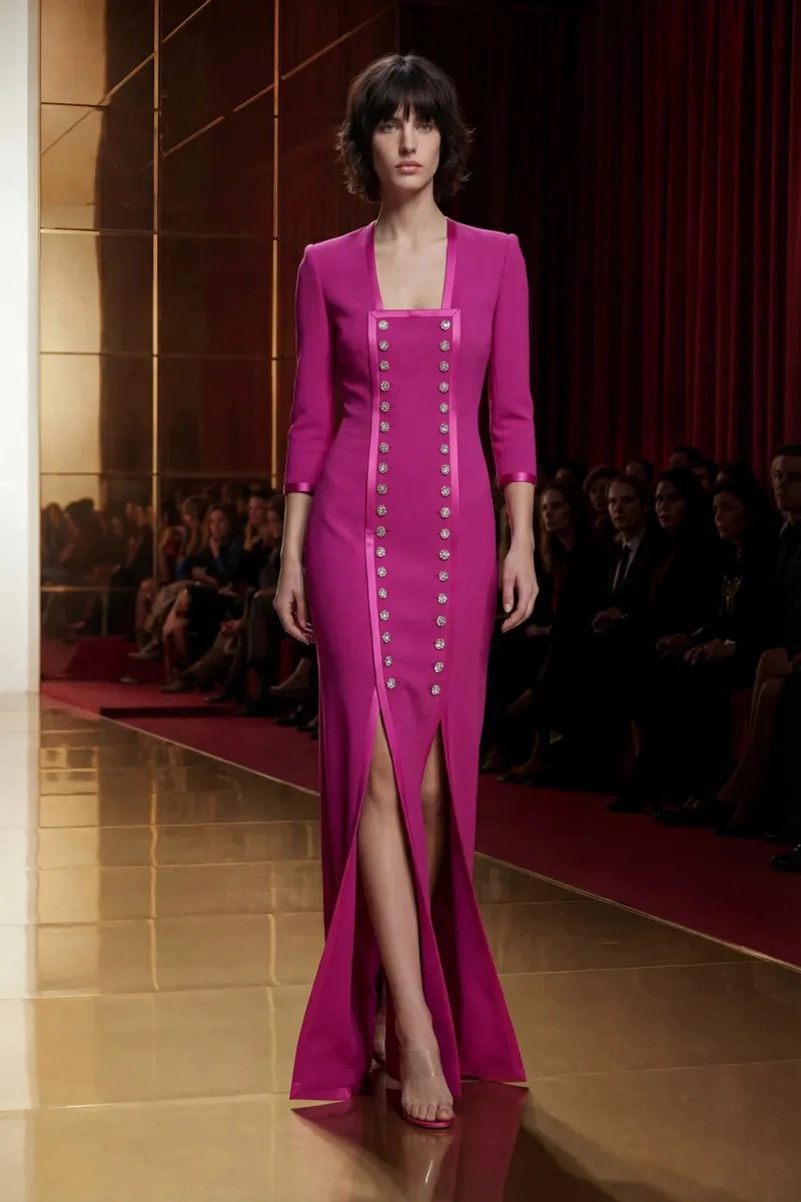
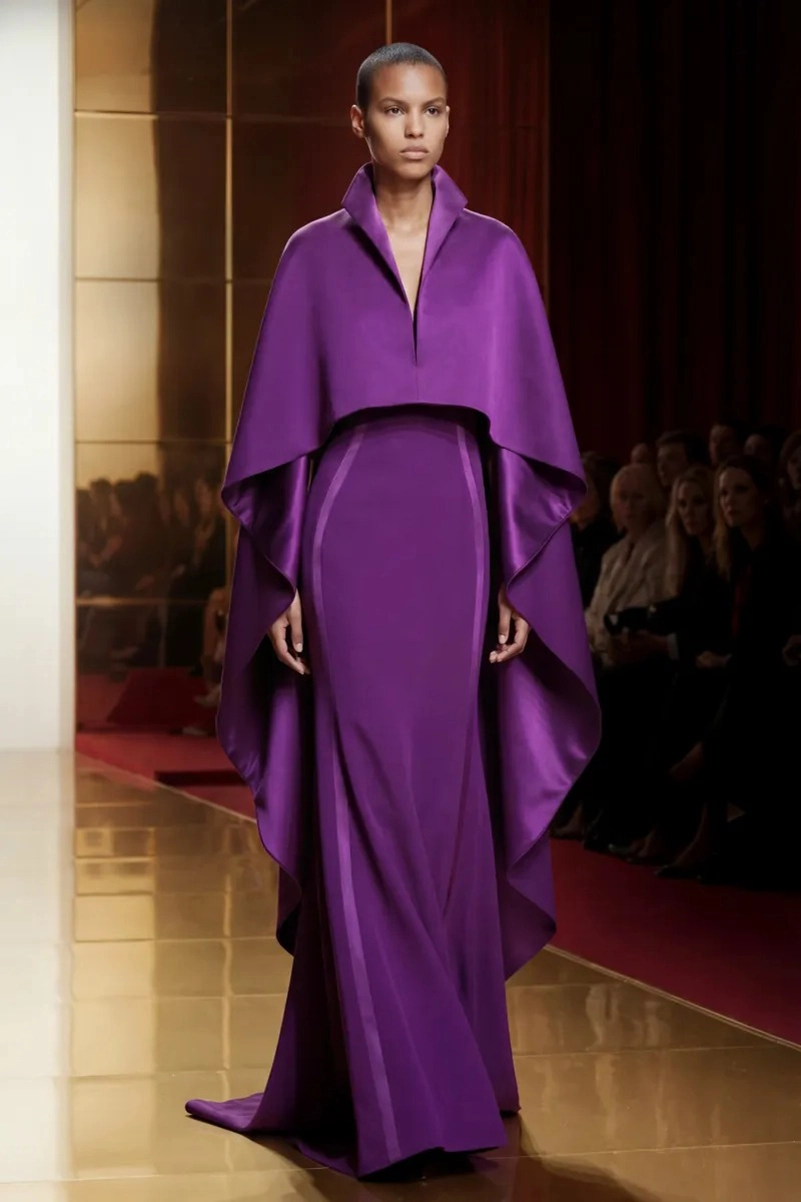
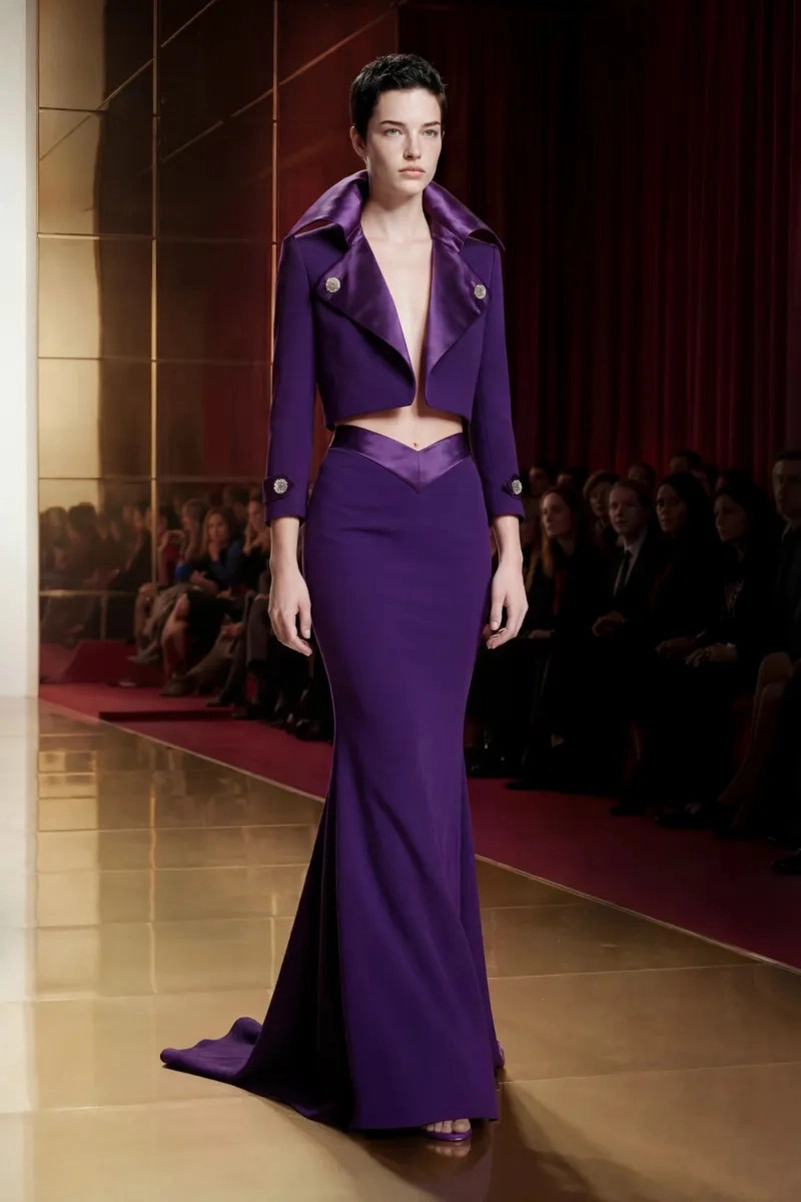
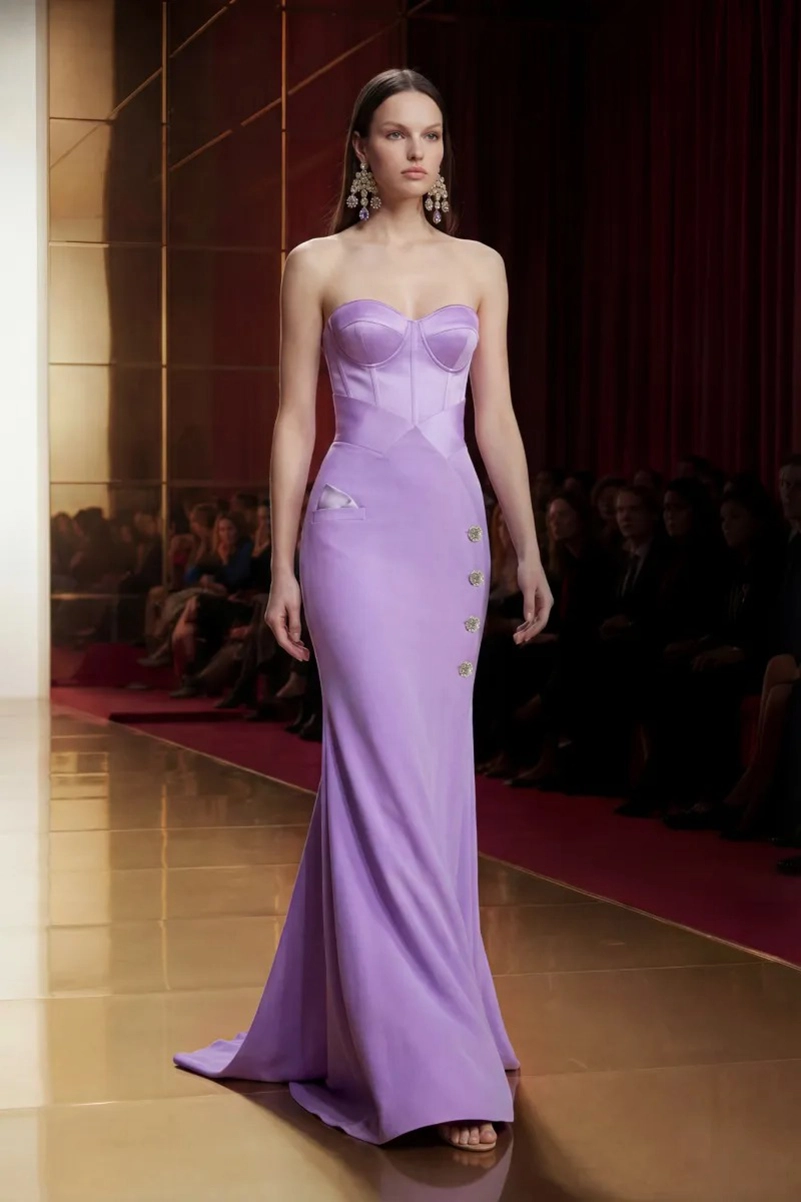
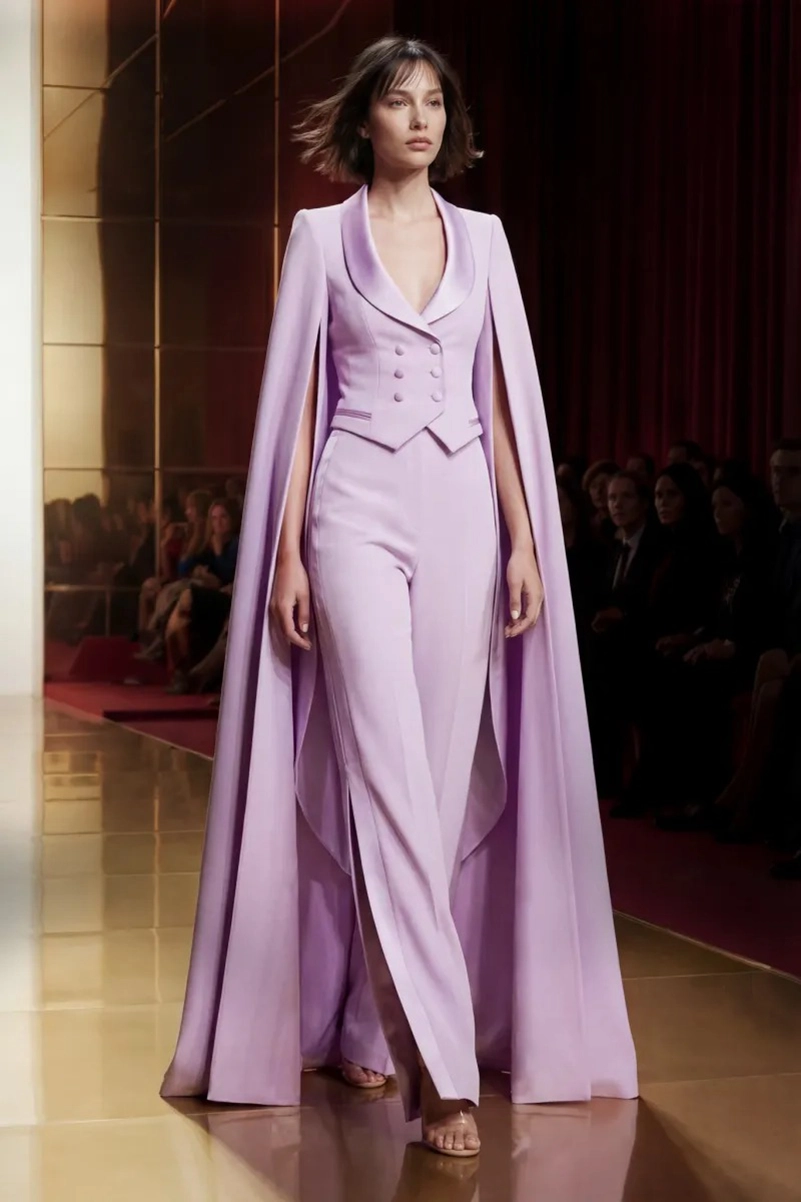
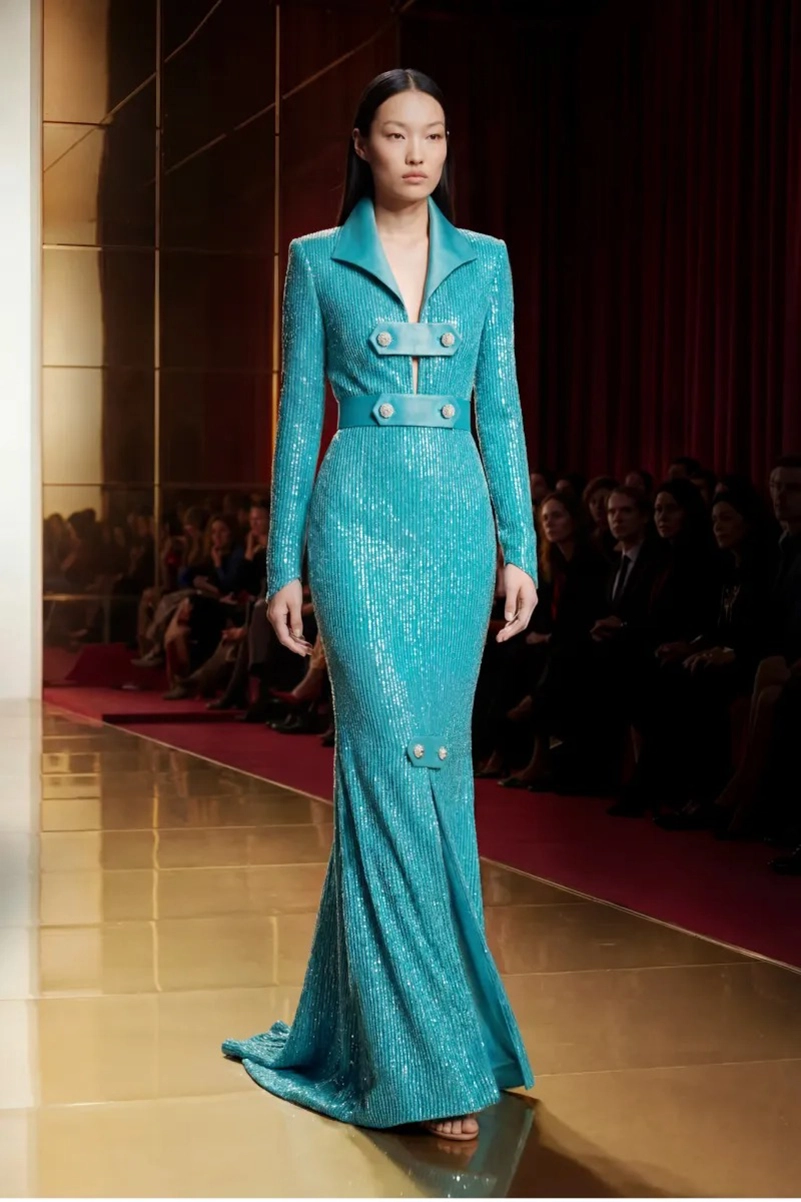
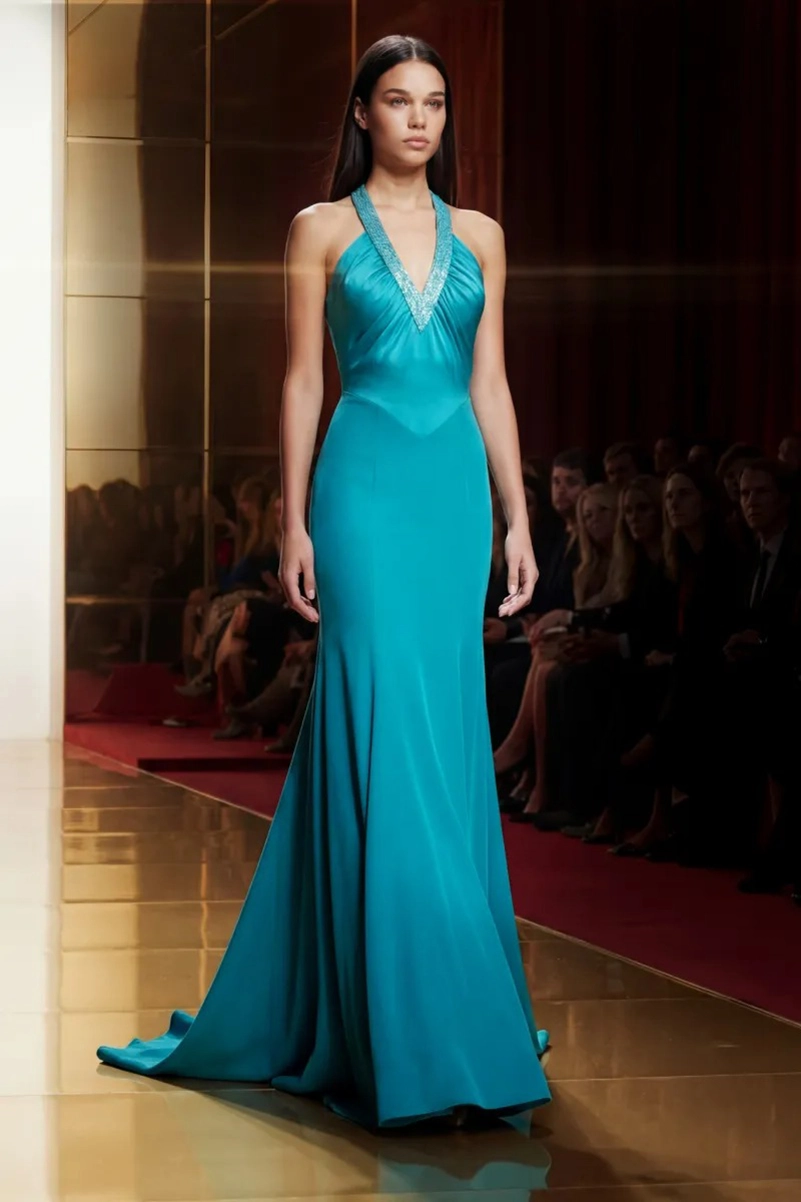
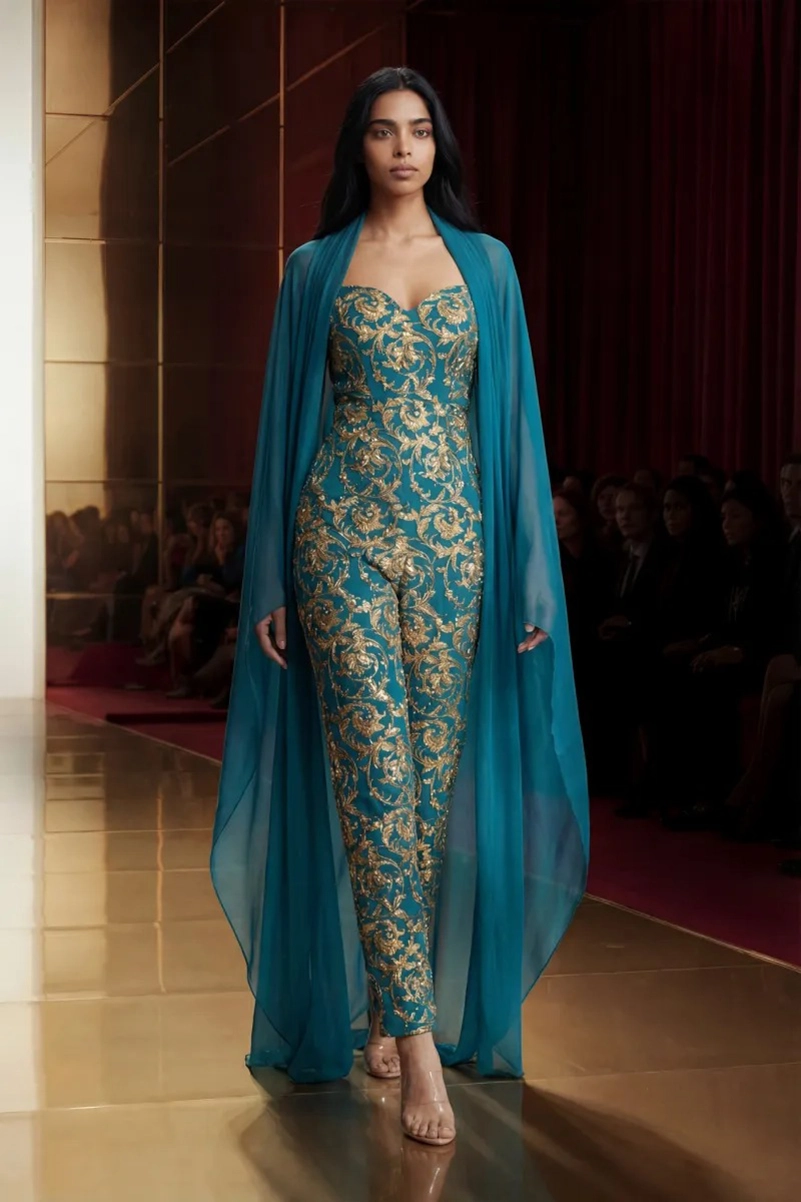
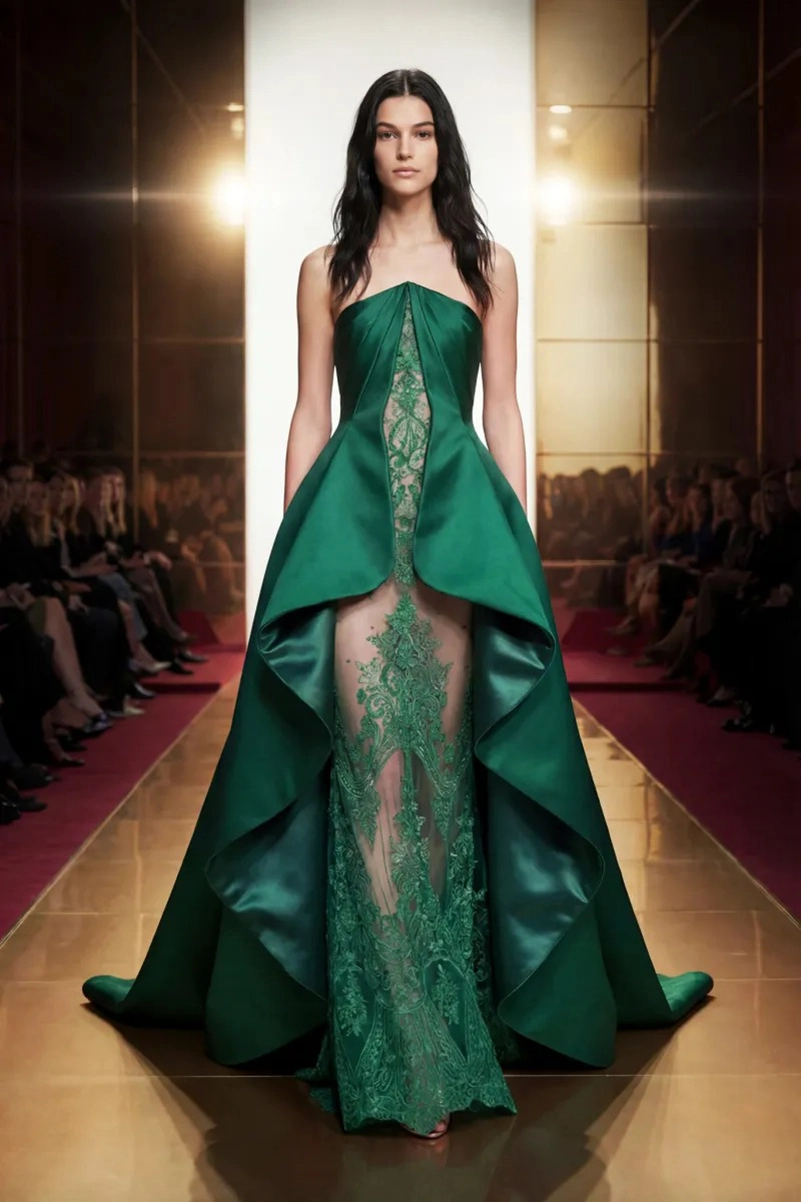
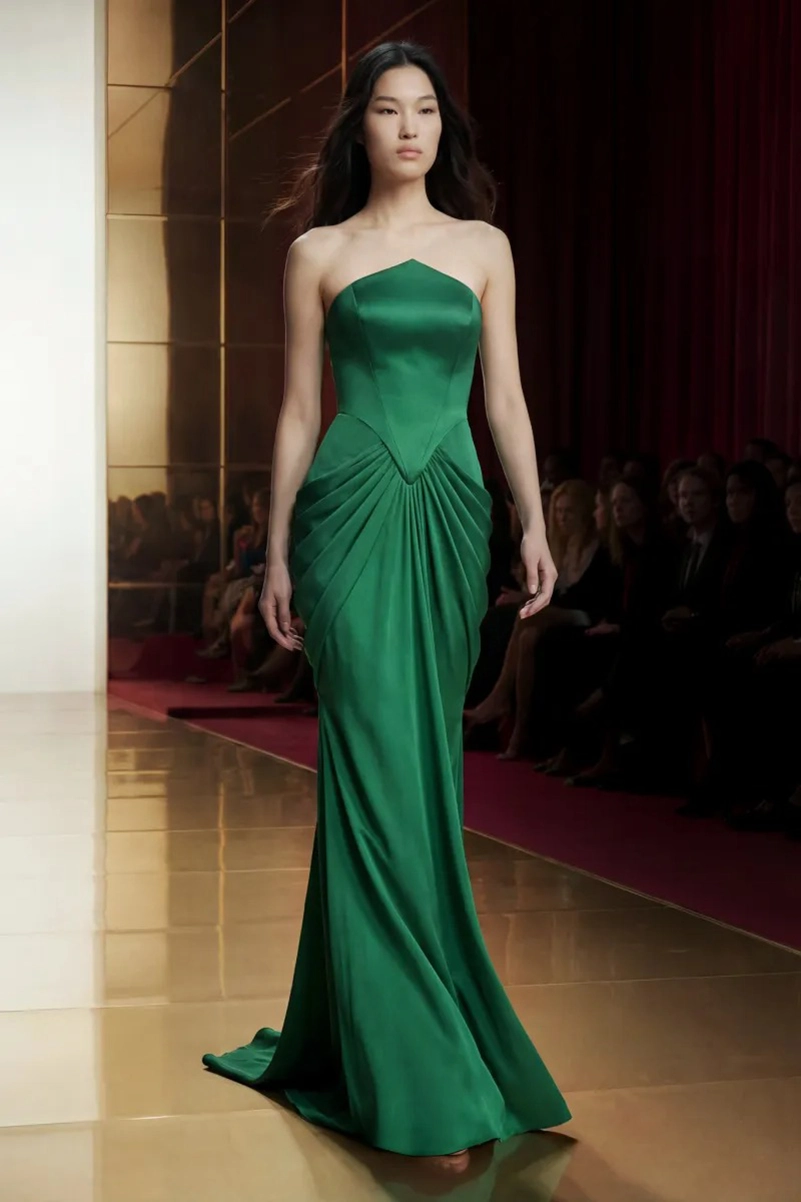
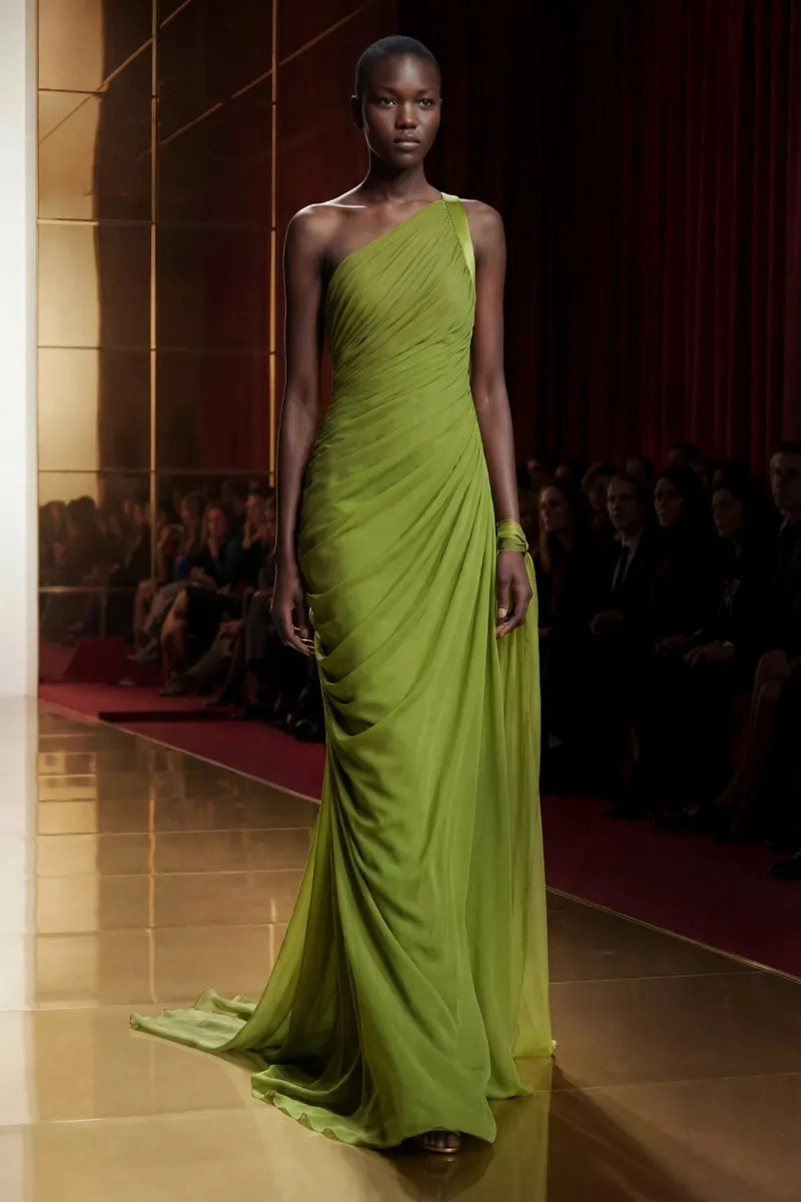
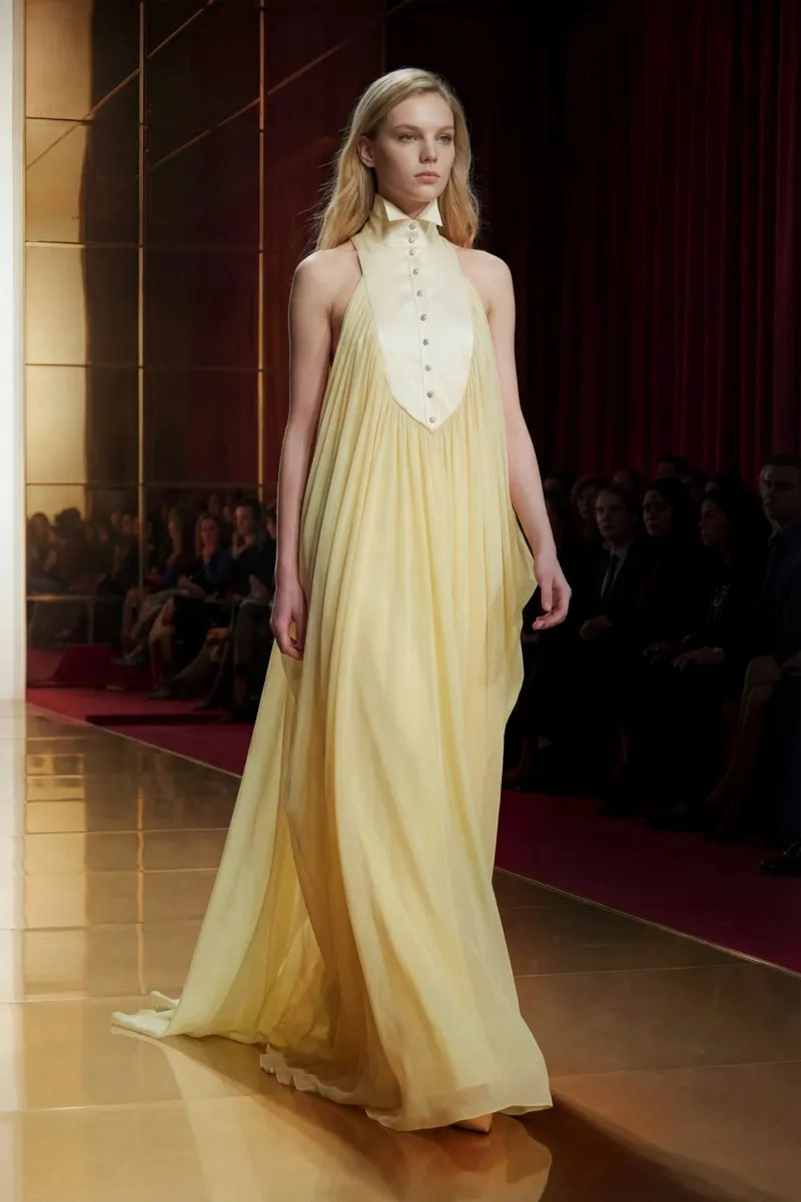
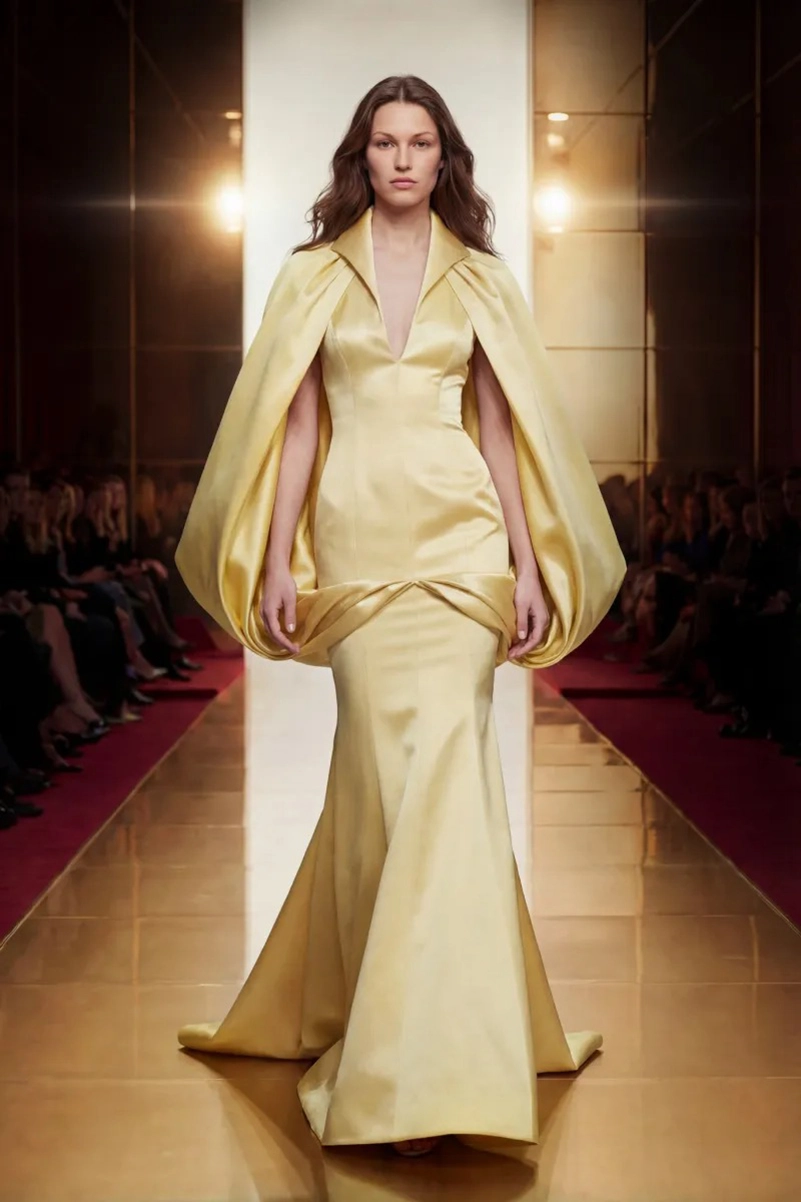
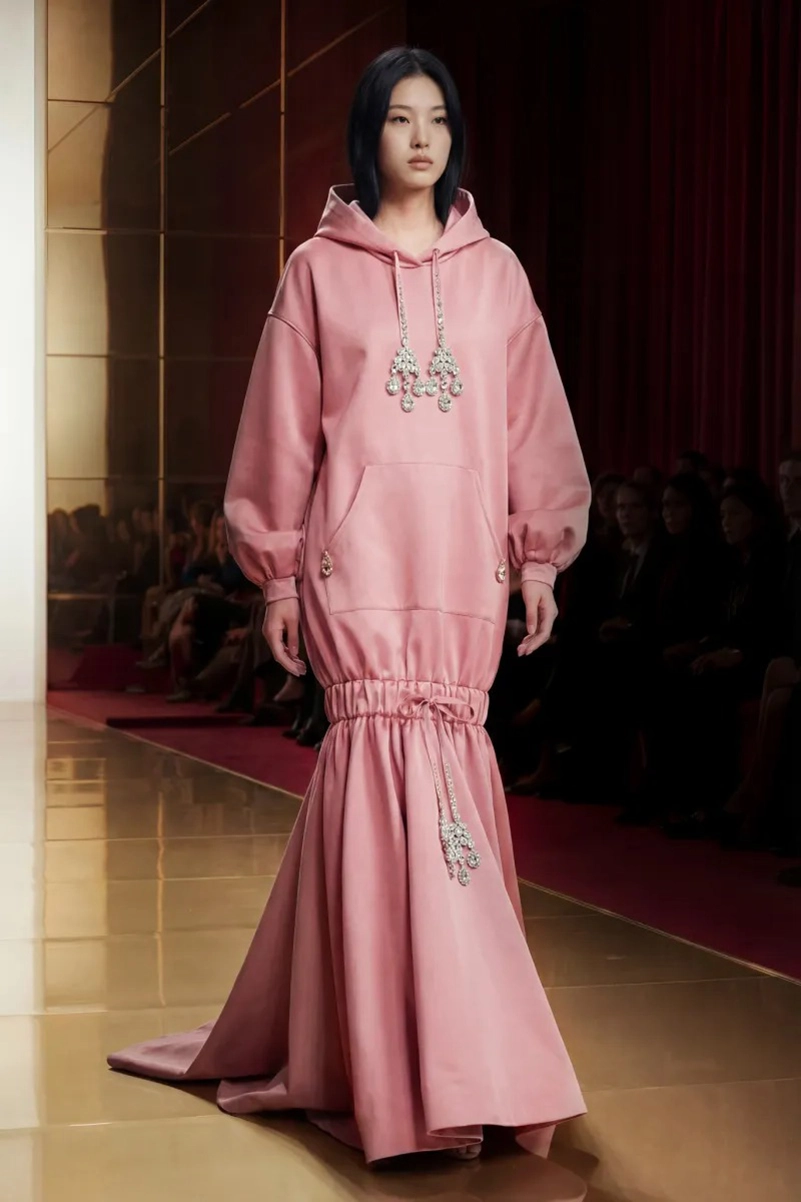
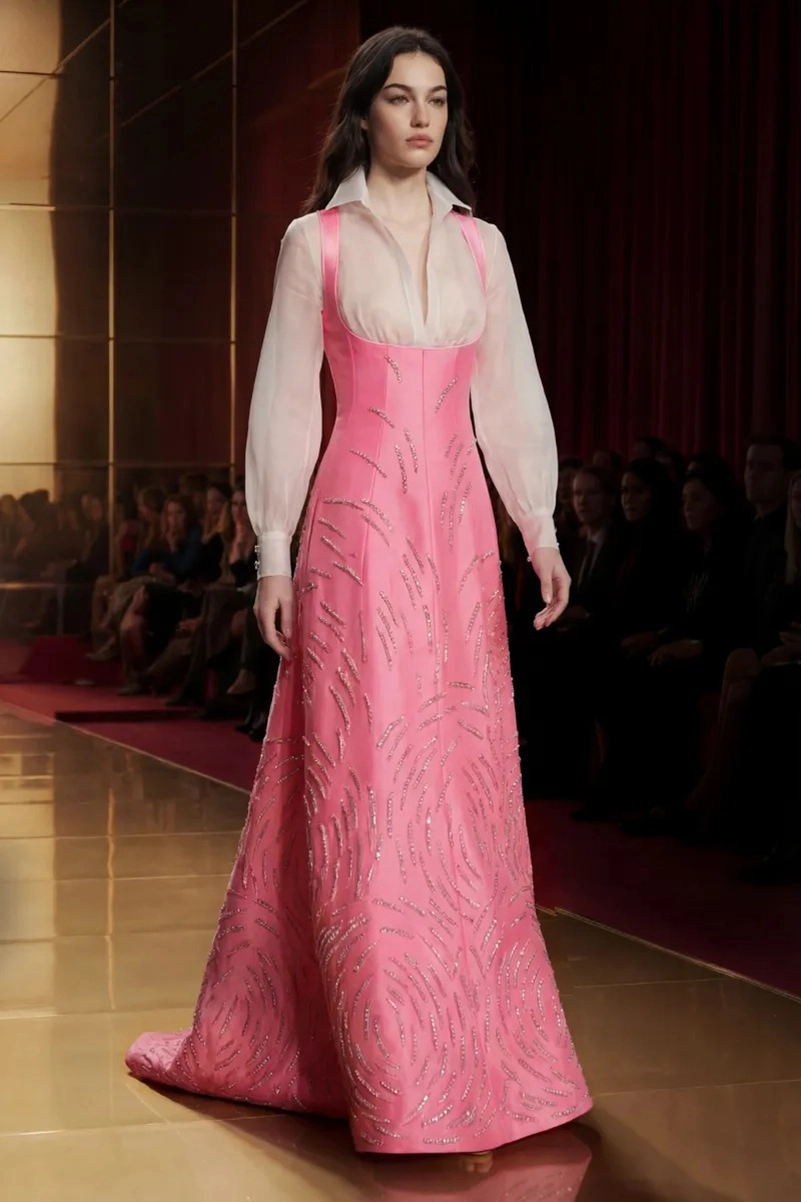
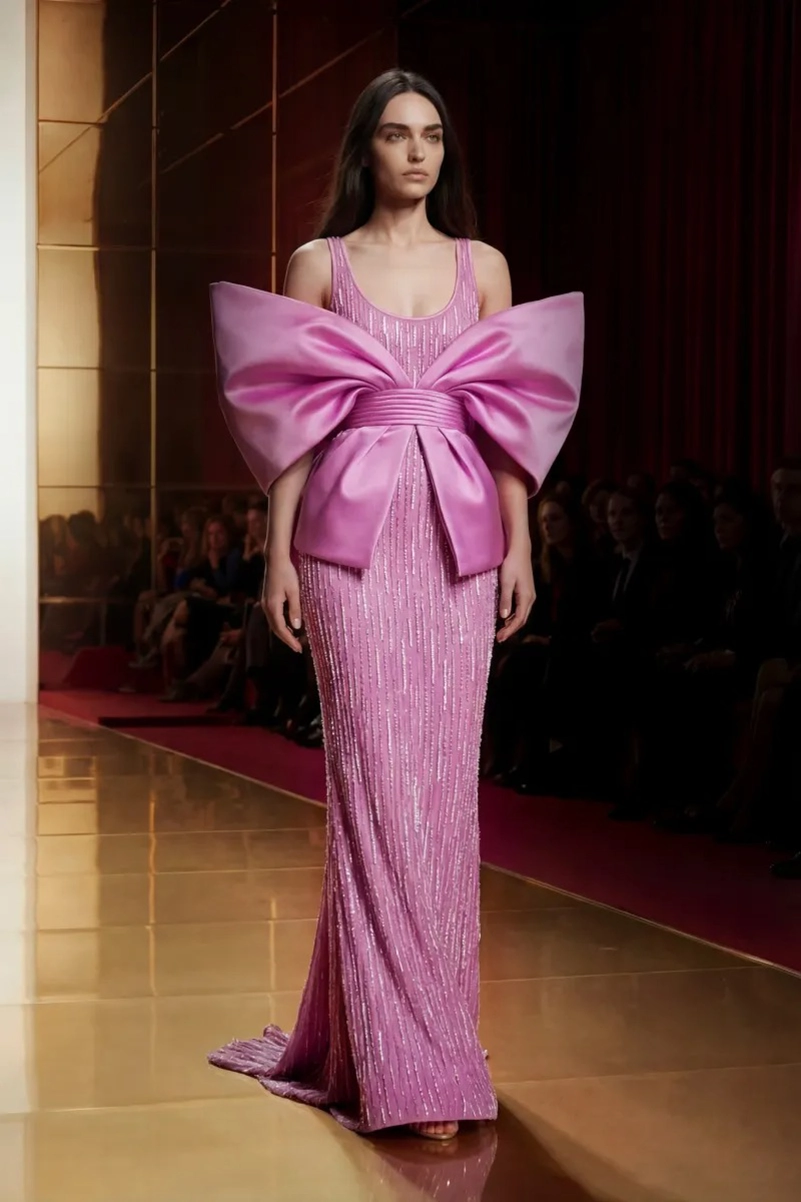
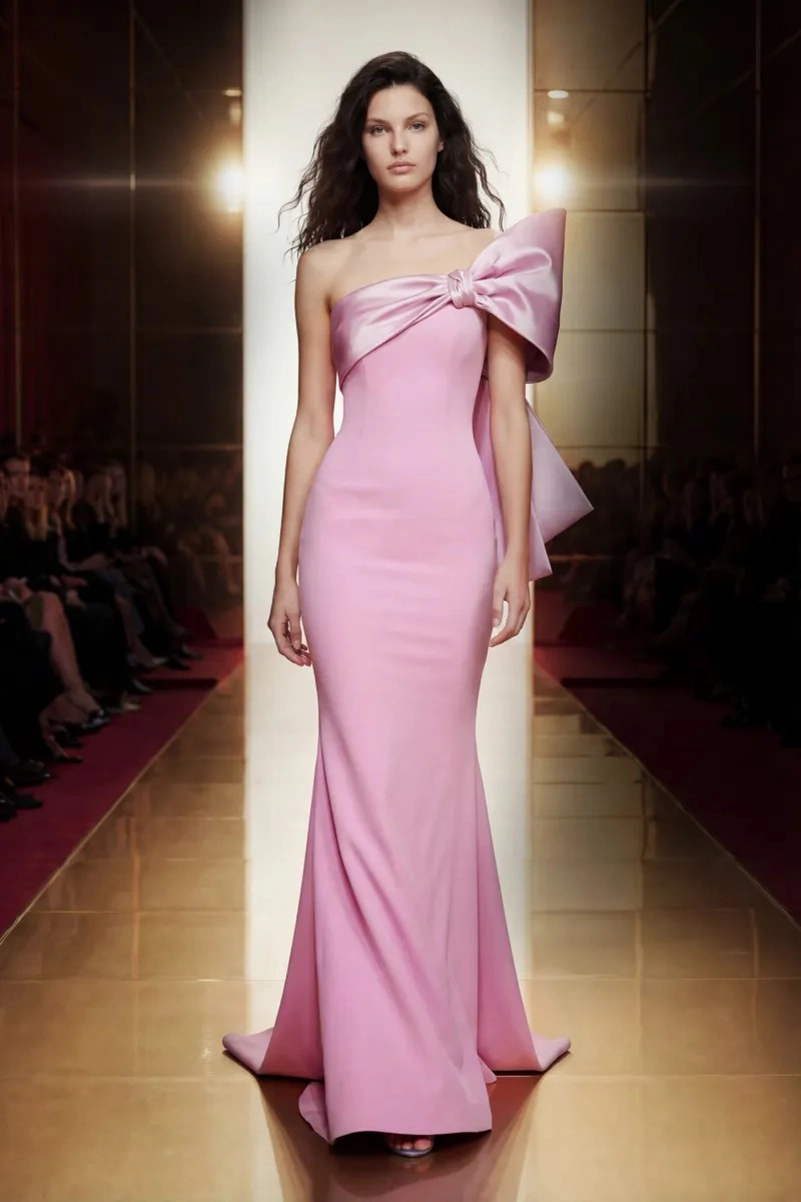
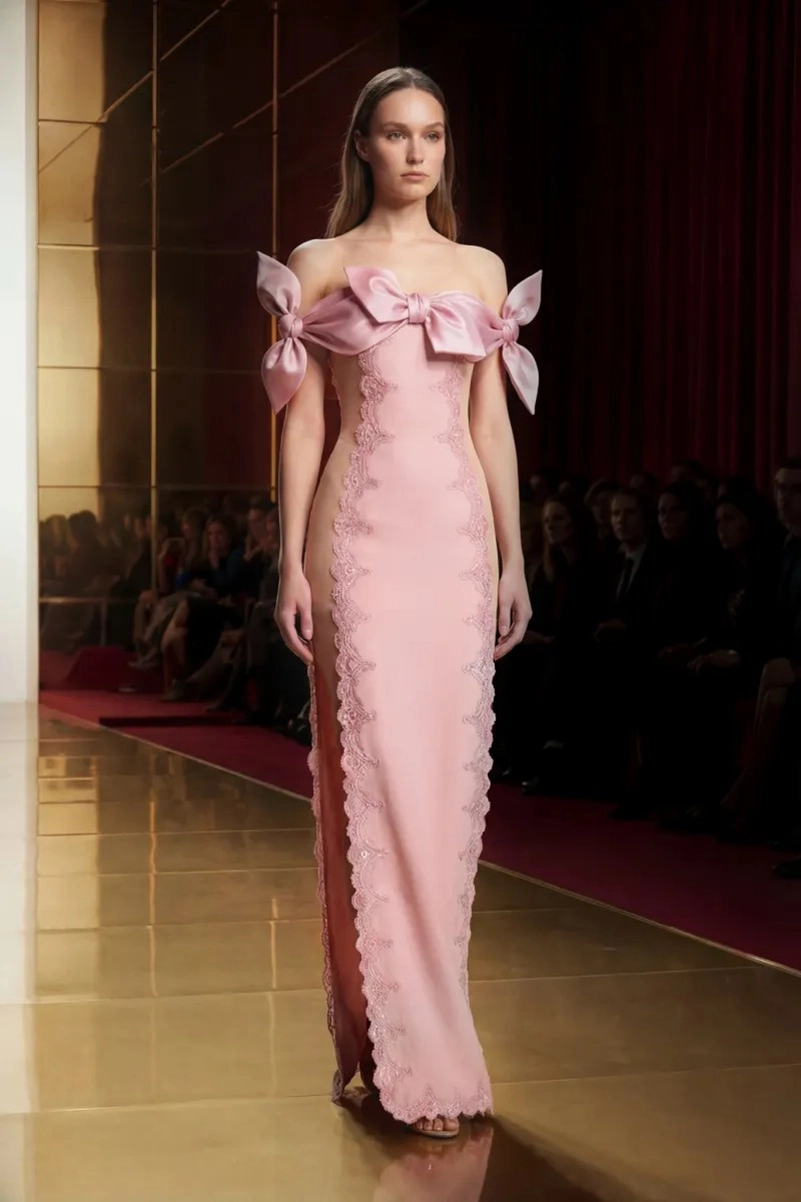
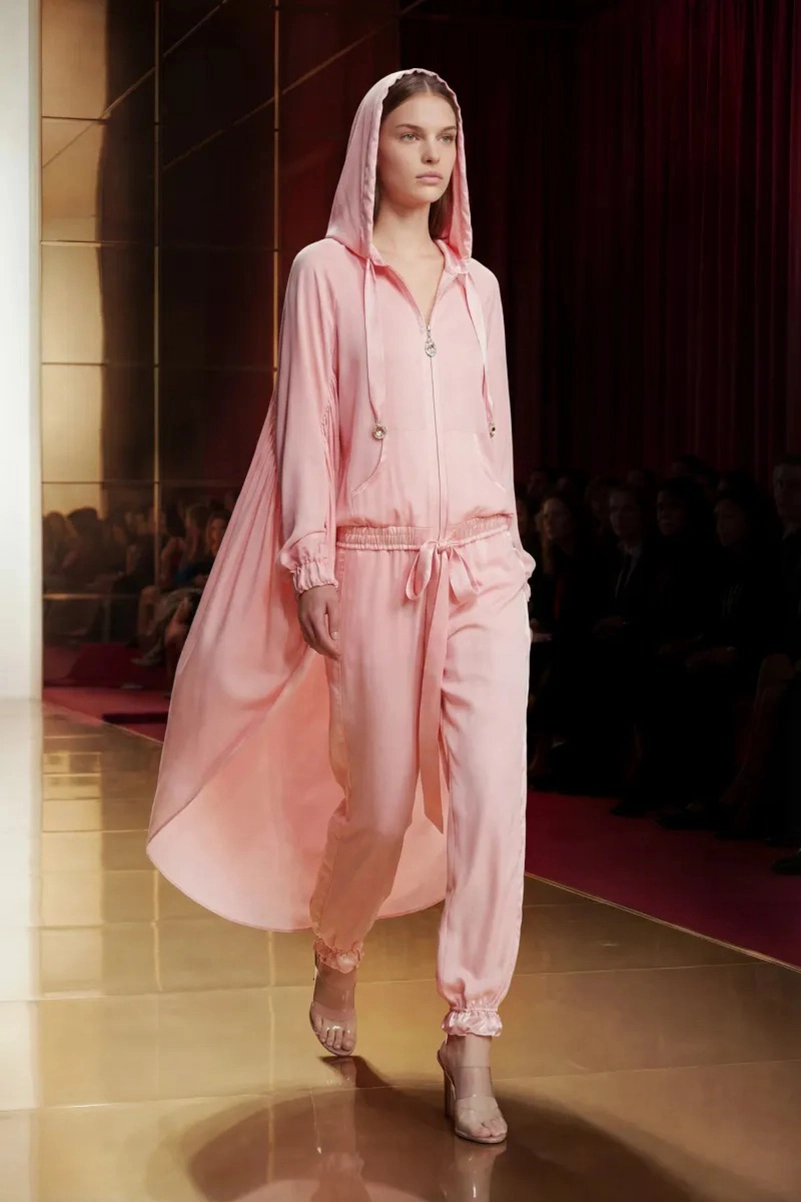
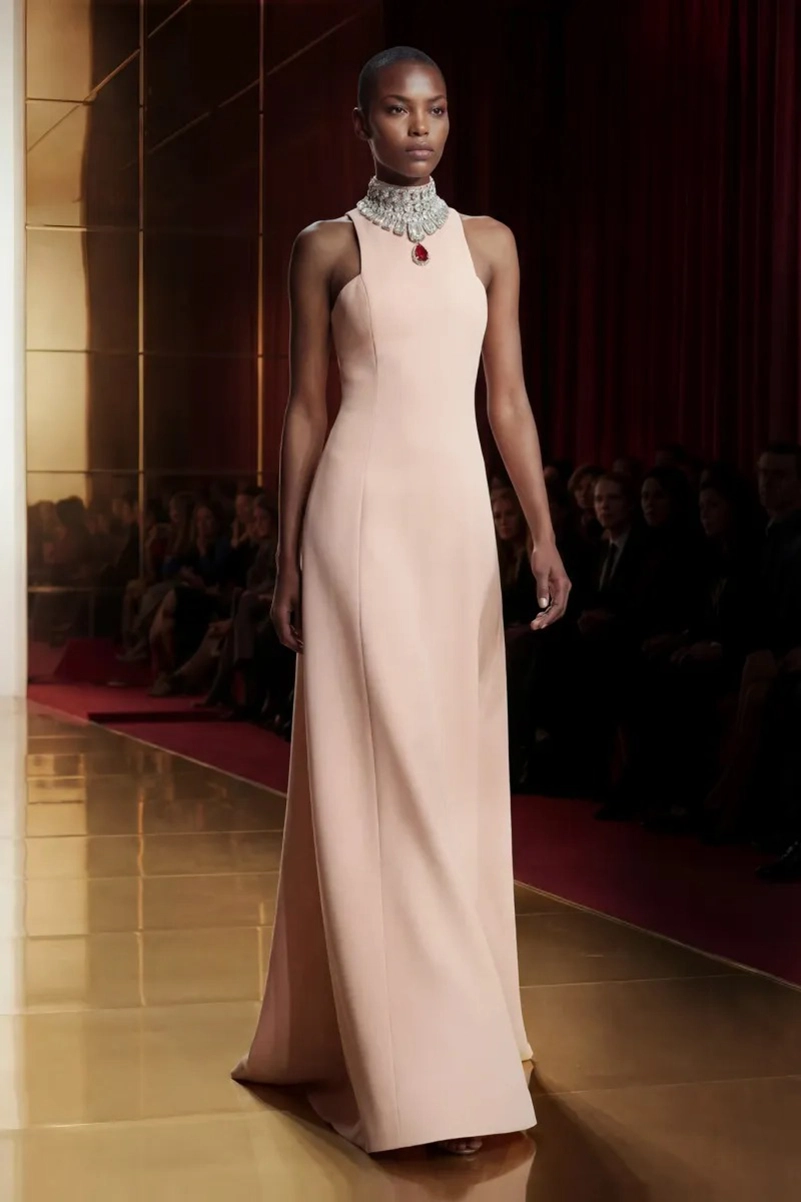
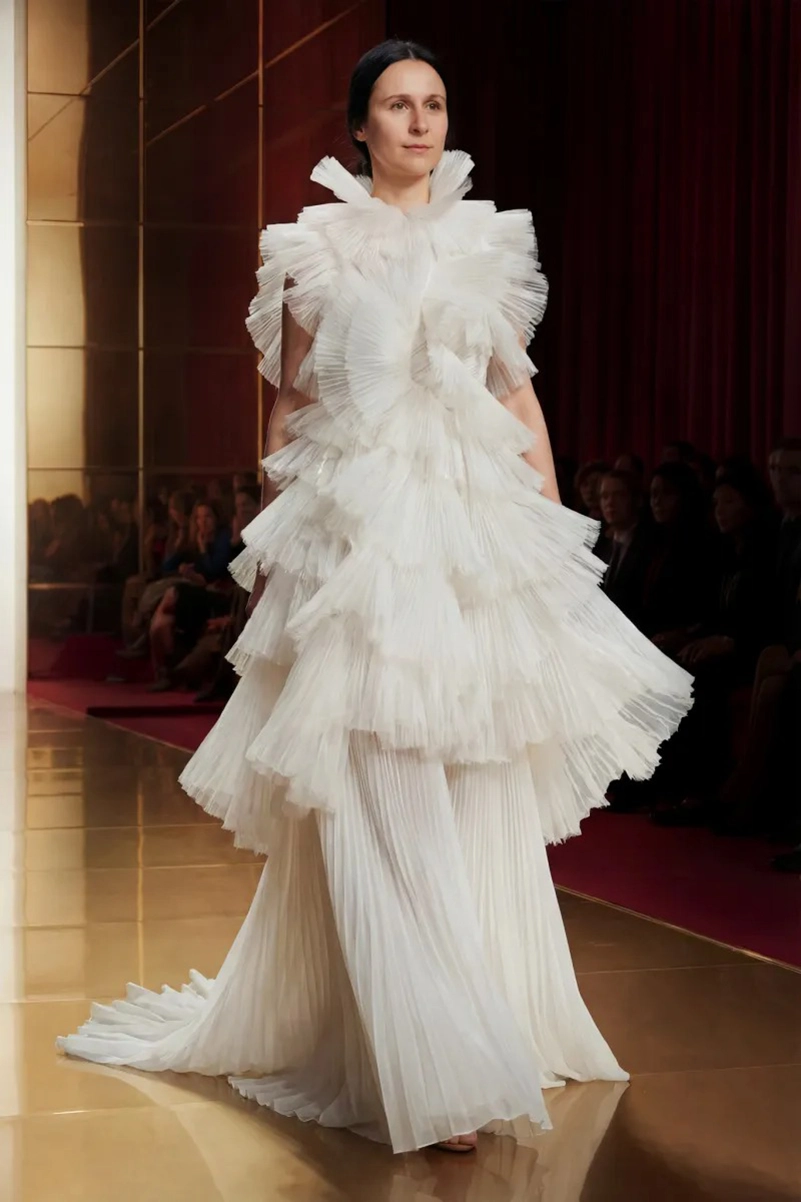
Alexis Mabille Spring Couture 2026 debuted during Paris Couture Week, presenting a couture collection and show rendered entirely through artificial intelligence on screens at the Lido theater in Paris. Guests arrived to a physical venue and watched a runway that existed as a wall to wall screen experience, with larger than life models appearing in a continuous sequence across the space. The central fact of Alexis Mabille Spring Couture 2026 is that there were no live models and no physical garments presented in the room, the show itself was the output. Mabille described the project as months of work with an AI studio partner, treating the tool like an added member of the team, not a button that generates answers. In the context of couture, where access is already limited and most people experience collections through edited clips, his choice pushes that reality to the front and makes it the format. The result is not a runway memory of who wore what first, it is a viewing experience where the clothes are already mediated, already framed, and already controlled by the screen.
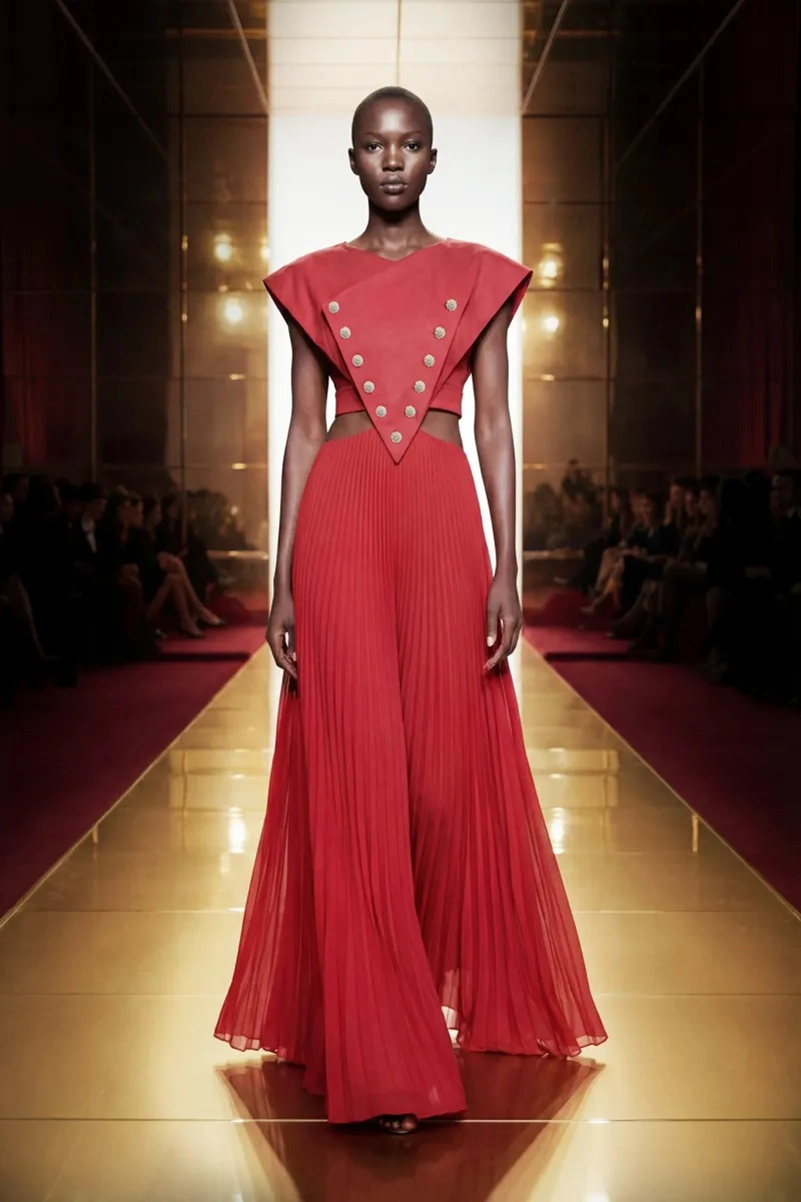
Within that screen based format, the clothes move through a broad wardrobe spectrum that still reads as couture in attitude and finish. The cast of looks is built to be read quickly and clearly, because a digital runway has no backstage pause and no front row binocular moment, it is one continuous stream. That clarity also turns the collection into a set of options, almost like a lookbook with pace and scale. It is couture presented as a sequence of decisions, coat or dress, sharp line or softer shape, fitted or looser, with the screen doing the job of making every detail feel close. The most persuasive part of the story is how the process was explained through client reality. Mabille connected the AI workflow to how couture is often commissioned now, through remote conversations, fittings planned around travel, and a final moment in Paris that can be brief. It also clarifies the point that this was not about removing human work from couture, it was about changing how ideas are previewed and communicated before the hand work begins.
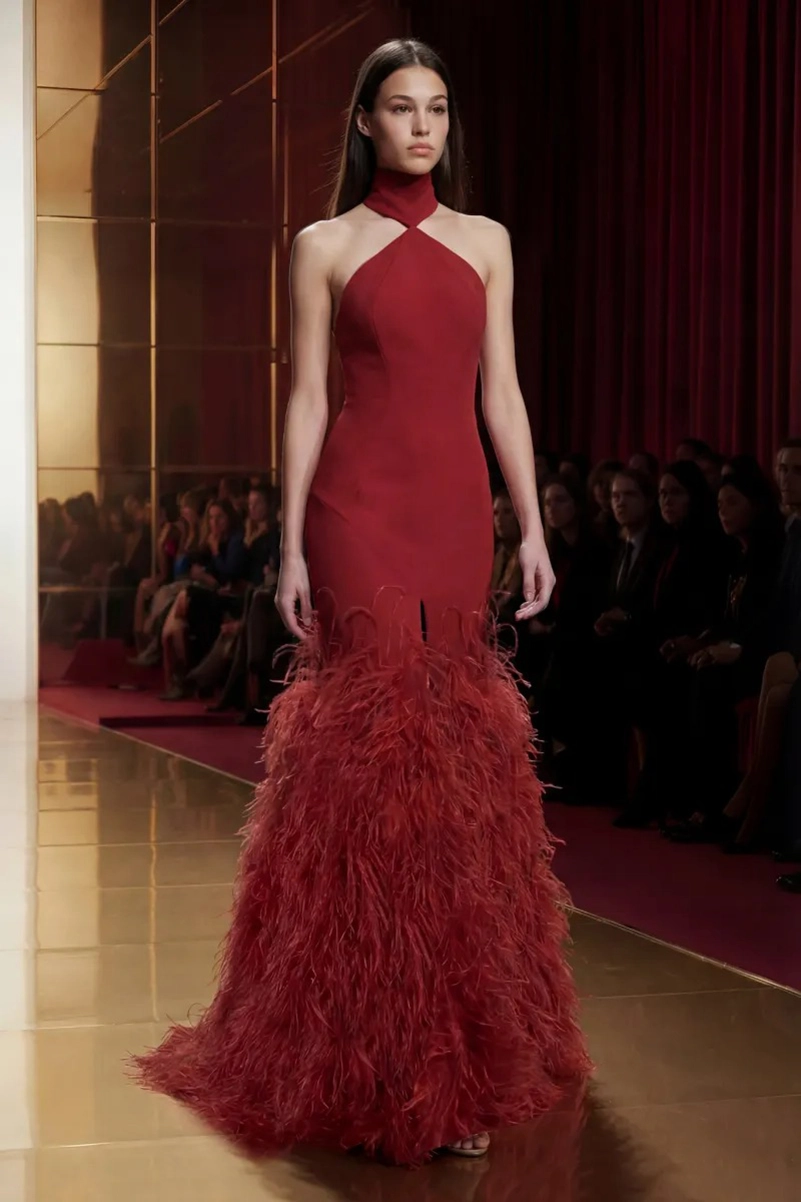
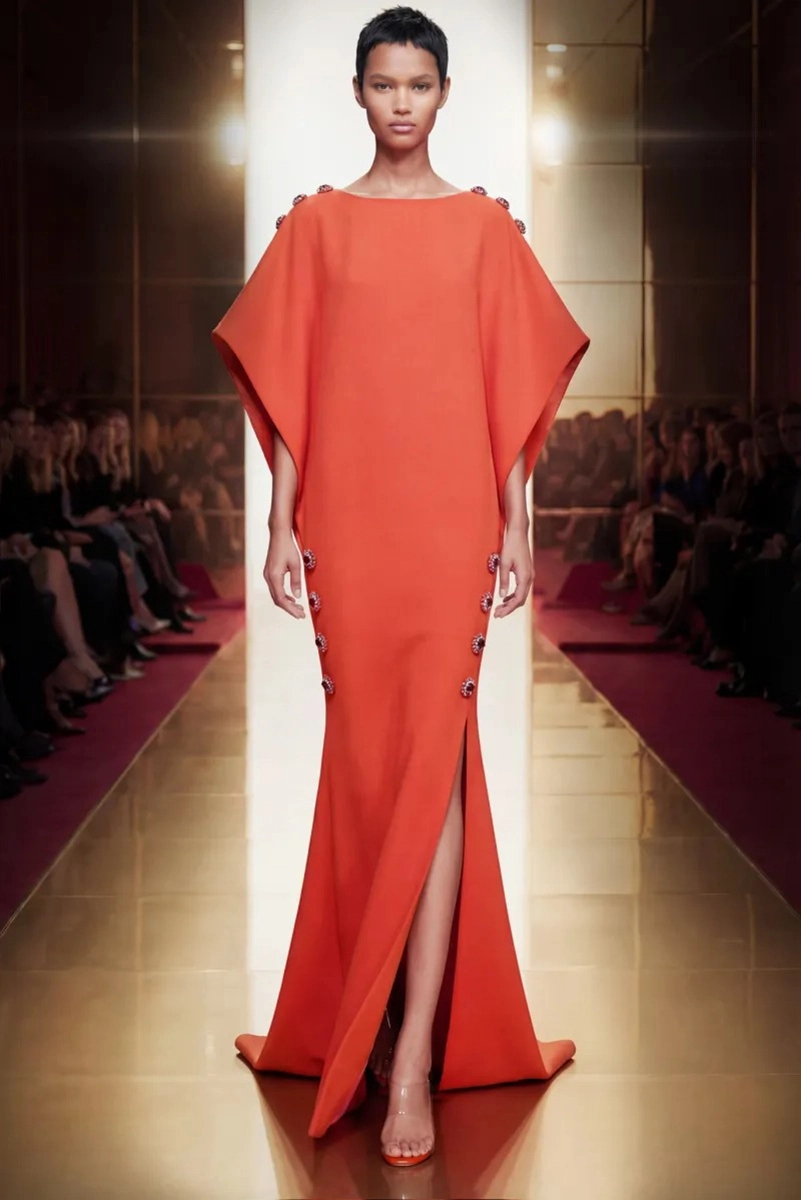
If the show format is what people will debate, the collection itself still needs anchors that exist beyond the screen. On the house side, the Spring Summer 2026 haute couture page presents finished pieces with specific materials and garment descriptions, including a long cascade gown described in white diamond pleated and frayed organza. That matters because it confirms the project is attached to real couture language, fabric, and construction, even when the runway moment is virtual. Spring Couture 2026 then becomes a case study in how couture can be presented when the client journey and the audience journey no longer look the same. It is a collection designed to be watched first and worn later, with the screen acting as the first fitting of the season.
 The Cool Index
 The Cool Index
Alexis Mabille’s AI only couture show reframes the runway as pure viewing experience. The idea lands as thoughtful and controlled, grounded by real materials and house codes. Provocative in format more than look, it feels cerebral, niche, and very Paris.
Extra Style Notes
Brand DNA
Parisian designer born in Lyon who launched his label in 2005, known for elegant couture and inventive signature bows that cross menswear and womenswear. Trained in classic French couture and showing at Paris Haute Couture Week, his work radiates chic, playful spirit.
Related Links